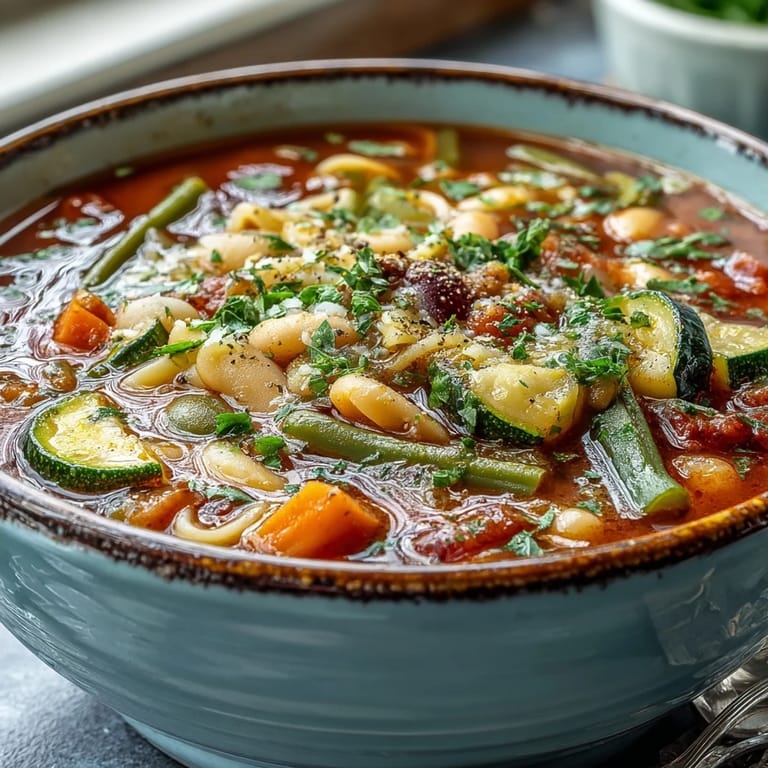
 Pin This
 There's something about a pot of minestrone simmering on the stove that feels like coming home, even if you're cooking it for the first time. My neighbor Maria used to make this soup every Sunday, and the smell would drift through our apartment building like an invitation. She'd always say the secret was using whatever vegetables looked good at the market that day, never apologizing for swapping one thing for another. That philosophy stuck with me, and now I make minestrone the same way—seasonal, flexible, and always somehow exactly what I need.
I made this for my book club on a gray November afternoon, and everyone arrived already cold and a little grumpy. Within twenty minutes of that soup hitting the table, the whole mood shifted—people were trading vegetable memories, asking for seconds, and suddenly we were all talking about our grandmothers' kitchens instead of the book. That's when I realized minestrone isn't really a recipe; it's a conversation starter in a bowl.
Ingredients
- Olive oil: Use a good quality one, but save your expensive extra virgin for drizzling at the end—this is where regular olive oil shines.
- Onion, carrots, and celery: This trio (soffritto) is the backbone of Italian cooking, and spending five minutes getting them soft and fragrant sets the tone for everything that follows.
- Zucchini or butternut squash: In summer, zucchini brings freshness; in winter, squash adds sweetness and body—choose what's in season for the best flavor.
- Green beans, kale, or spinach: These leafy additions wilt into the broth and add color and nutrition without being fussy.
- Garlic: Mince it fresh, never use the jarred version for this soup—you'll taste the difference immediately.
- Diced tomatoes: Canned tomatoes work beautifully here because they're consistent and release their acidity slowly into the broth.
- Vegetable broth: Make your own if you have time, but good quality store-bought broth won't let you down; avoid the ultra-salty varieties.
- Cannellini or borlotti beans: These creamy beans dissolve slightly into the broth and add protein and richness without heaviness.
- Small pasta: Ditalini, elbow, or shells work best because they don't overwhelm the soup and cook through evenly.
- Bay leaf, oregano, and basil: These dried herbs are forgiving and blend into the background, building flavor layer by layer.
- Fresh parsley: This is your finishing touch—it brightens everything and should always be fresh, chopped just before serving.
- Parmesan cheese: Optional, but a generous grating adds a savory note that transforms each spoonful.
Tired of Takeout? 🥡
Get 10 meals you can make faster than delivery arrives. Seriously.
One email. No spam. Unsubscribe anytime.
Instructions
- Build your base:
- Heat olive oil in a large pot over medium heat and add the onion, carrots, and celery together. Let them soften and become translucent, about five minutes—this is where the soup starts to smell like comfort. You'll notice the vegetables releasing their natural sweetness and beginning to caramelize slightly at the edges.
- Add aromatics and vegetables:
- Stir in the minced garlic, then your seasonal vegetables (zucchini or squash, plus green beans or kale). Cook for three minutes until the garlic perfumes the oil. The kitchen should smell intentional now, like you're cooking with a plan.
- Layer in tomatoes and broth:
- Add the diced tomatoes and optional potato, cook for two minutes to let them warm through, then pour in the vegetable broth all at once. The sound of the liquid hitting the hot pan is satisfying, and you'll notice the color deepen immediately as everything comes together.
- Simmer and develop:
- Bring everything to a boil, then lower the heat and let it simmer gently for fifteen minutes. This isn't a race—the longer you let the flavors marry, the more cohesive the soup becomes. The potato (if using) will soften and add subtle body to the broth.
- Finish with beans and pasta:
- Add the drained beans and pasta, stirring to distribute them evenly. Simmer uncovered for ten to twelve minutes, stirring occasionally, until the pasta is tender and the beans have warmed through. Taste a strand of pasta—when it's just past al dente, you're done.
- Season and taste:
- Remove the bay leaf, then stir in the oregano, basil, salt, and pepper. Taste and adjust—you might want more salt, more herbs, or even a splash more broth if it's thicker than you prefer. This is your moment to make it exactly right.
- Finish with freshness:
- Stir in the chopped fresh parsley, ladle into bowls, and top with grated Parmesan if you're using it. A drizzle of good olive oil over the top is never a mistake.
 Pin This
 My daughter made this soup for her college roommate who was homesick and exhausted, and something about that gesture—a pot of minestrone made from a recipe she'd watched me make a hundred times—felt more meaningful than any card or care package. Food has a way of saying things that words can't quite reach, and this soup says: I'm thinking of you, you're not alone, and someone took time to nourish you.
How to Make It Your Own
The beauty of minestrone is that it was always meant to be flexible. Spring calls for peas, leeks, and tender asparagus. Summer demands fresh zucchini and maybe some fresh basil from the garden. Fall brings butternut squash and kale. Winter can be any hardy vegetable you can find—cabbage, root vegetables, even frozen spinach when fresh greens aren't available. The formula stays the same, but the soup tells a story of the season you're cooking in.
Storing and Reheating
This soup keeps beautifully in the refrigerator for up to five days, and it actually tastes better the next day when all the flavors have had time to settle and deepen. When you reheat it, do so gently over medium heat, stirring occasionally and adding a splash of broth if it's gotten too thick. The pasta will soften a bit more as it sits, so you might want to cook it slightly firmer than you'd normally prefer if you're planning leftovers.
Serving Suggestions and Final Touches
Minestrone wants company—serve it with thick slices of toasted bread rubbed with garlic, or tear some bread into the bowl itself and let it soak up the broth. A generous grating of Parmesan is traditional, but so is a splash of good olive oil and a grind of fresh pepper. If you're making this for people who avoid dairy, a sprinkle of nutritional yeast or a simple drizzle of olive oil is just as welcome.
- For a vegan version, simply omit the Parmesan or use a dairy-free alternative.
- A Parmesan rind simmered in the broth adds incredible depth—just remember to fish it out before serving.
- Don't be afraid to taste and adjust seasoning multiple times as you cook; good soup is built on tasting and tweaking.
 Pin This
 Make this soup with confidence, knowing that every single person who tastes it will feel seen and cared for. That's the real magic of minestrone.
Frequently Asked Questions
- → Can I make this soup ahead of time?
Yes, minestrone tastes even better the next day. Store in the refrigerator for up to 4 days. Add a splash of broth when reheating as the pasta absorbs liquid over time.
- → What vegetables work best in different seasons?
In summer, use zucchini, green beans, and fresh tomatoes. For winter, opt for butternut squash, kale, cabbage, and root vegetables. Spring calls for peas, asparagus, and leeks.
- → Can I freeze vegetable minestrone?
Yes, but cook the pasta separately if freezing. The soup base freezes well for up to 3 months. Add freshly cooked pasta when reheating for the best texture.
- → How can I make this soup more filling?
Add extra beans, increase the pasta amount, or include diced potatoes. Serve with crusty bread and drizzle with quality olive oil for a heartier meal.
- → What can I substitute for cannellini beans?
Borlotti beans, chickpeas, or white kidney beans work perfectly. You can also use a mix of different beans for varied texture and flavor.
- → How do I prevent the pasta from getting mushy?
Cook the pasta just until al dente, about 8-10 minutes. If making ahead, slightly undercook the pasta or add it fresh when reheating the soup.