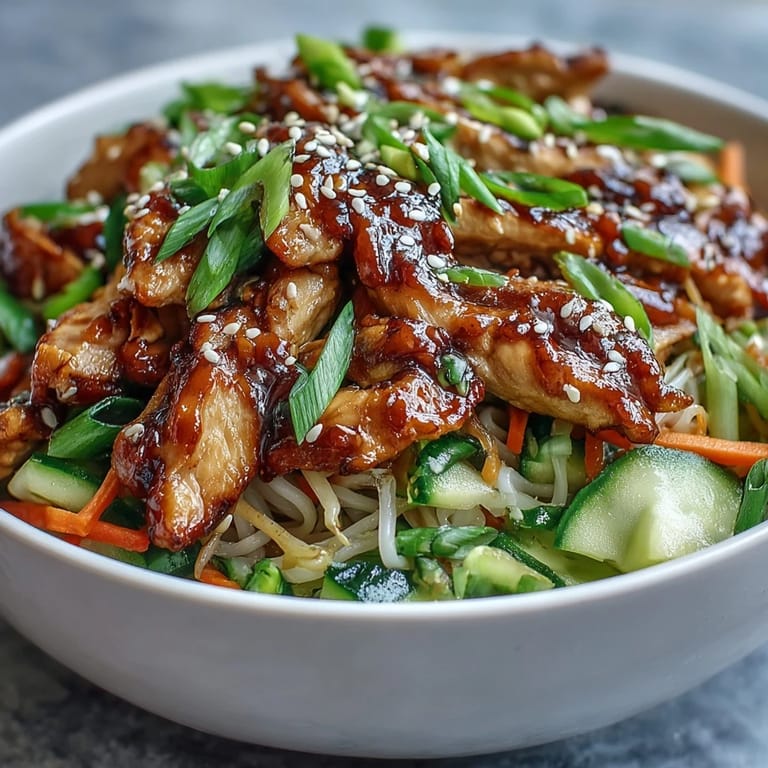
 Pin This
 There's something about the smell of sesame oil hitting a hot wok that instantly transports me to a tiny noodle shop tucked away on a side street, where the owner moved with such practiced efficiency that ordering felt like watching choreography. Years later, I finally figured out how to recreate that magic at home, and it turned out the secret wasn't some exotic technique—it was just understanding that good balance of savory, sweet, and bright flavors could make something feel restaurant-quality in under an hour. This Asian chicken noodle bowl became my answer to those nights when I wanted something vibrant and satisfying without spending the evening in the kitchen.
I'll never forget the first time I made this for my friend who'd just gone vegan—she was skeptical about the fish sauce component until I explained I could swap it out, and then suddenly she was standing in my kitchen asking if she could watch because she wanted to steal the technique. Watching her eyes light up when she tasted it was the moment I realized this bowl had become more than just dinner; it was something I could share and adapt for anyone.
Ingredients
- Boneless, skinless chicken breast or thighs: Thighs stay juicier and more forgiving, but breasts work if you slice them thin and don't overcook—I learned this the hard way with a batch that turned rubbery.
- Tamari: This soy sauce alternative is smoother and works beautifully here; regular soy sauce is fine too, just watch the sodium content.
- Fish sauce: Use a small amount—it adds umami depth that makes people ask what your secret ingredient is.
- Rice vinegar: The acidity brightens everything and keeps the sauce from feeling heavy.
- Honey: Balances the salty and tangy elements with just enough sweetness to make you want seconds.
- Toasted sesame oil: Non-negotiable for authentic flavor; the toasted version has so much more character than plain.
- Neutral oil: Necessary for cooking the chicken without the sesame oil burning at high heat.
- Garlic and ginger: Mince the garlic small so it distributes evenly, and use fresh ginger if you can—the difference is noticeable.
- Rice noodles: These cook quickly and have a nice tender bite; soak them if you prefer softer noodles.
- Fresh vegetables: Julienne or slice everything uniformly so it's pleasant to eat and looks intentional in the bowl.
- Cilantro and sesame seeds: These garnishes aren't afterthoughts—they add freshness and crunch that complete the experience.
Tired of Takeout? 🥡
Get 10 meals you can make faster than delivery arrives. Seriously.
One email. No spam. Unsubscribe anytime.
Instructions
- Build your sauce foundation:
- Whisk together the tamari, fish sauce, rice vinegar, honey, both oils, garlic, and ginger in a medium bowl until the honey dissolves completely. The mixture should smell intoxicating at this point—that's how you know you're on the right track. Split it in half, reserving one portion for drizzling and using the other to coat the chicken.
- Marinate the chicken:
- Toss your sliced chicken with half the sauce and let it sit for 15 minutes while you prep everything else. This isn't just about flavor—the marinade helps keep the chicken tender as it cooks.
- Cook the noodles:
- Bring a pot of water to a boil and cook the rice noodles according to the package instructions, which usually means 3-5 minutes. Drain them immediately and rinse with cold water so they don't clump together and turn into a sticky mess.
- Sear the chicken:
- Get your skillet or wok screaming hot over medium-high heat, then add the marinated chicken and cook undisturbed for the first couple of minutes so it gets some color. Stir and cook another 3-5 minutes until the pieces are cooked through and have light caramelization on the edges.
- Assemble the bowls:
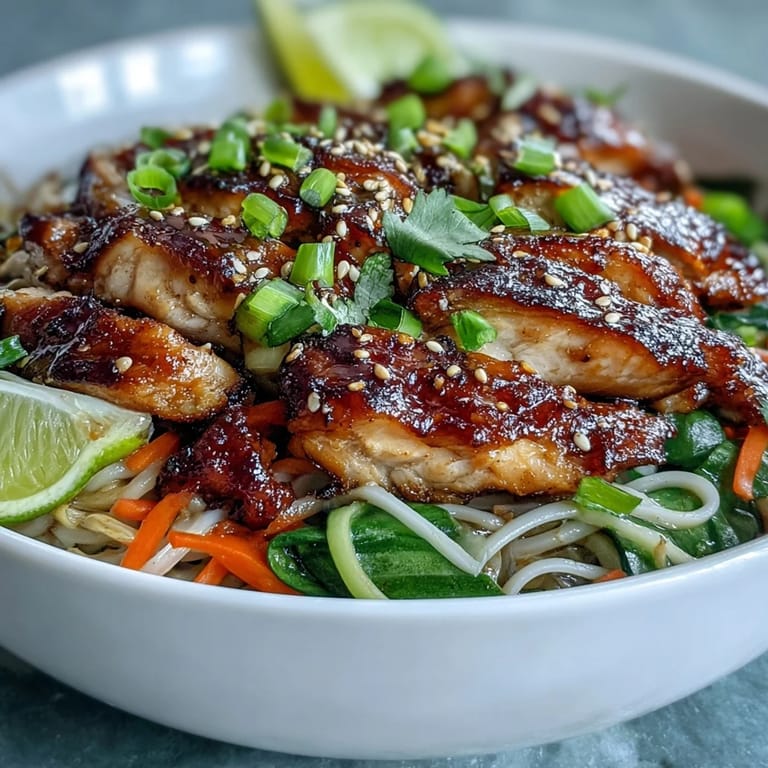
- Divide the cooked noodles among four bowls, then arrange the chicken and all your prepped vegetables on top in whatever pattern makes you happy. There's no right way to do this—I like making it look as intentional and colorful as possible.
- Finish and serve:
- Drizzle the reserved sauce over each bowl, then scatter cilantro and toasted sesame seeds on top, add a squeeze of lime, and serve immediately so everything is still warm and the noodles haven't started sticking together.
 Pin This
 My younger sibling once said, while sitting in my kitchen with a bowl of this in front of them, that this was the first thing I'd cooked that made them feel like I actually understood flavor. It wasn't fancy or complicated, but it had intention behind every element, and somehow that mattered more than anything else I could have made.
The Magic of Proper Seasoning Balance
What makes this bowl feel restaurant-quality isn't any single ingredient—it's how they work together. The tamari provides saltiness, the fish sauce adds umami depth, the rice vinegar cuts through with brightness, and the honey rounds everything out so your palate doesn't get tired. I used to think balance meant equal parts of everything, but I learned it's actually about letting each flavor have its moment while supporting the others. Once I understood that concept, I could taste when something was off instead of just knowing something wasn't quite right.
Adapting This Bowl to What You Have
The vegetable component is honestly flexible—this bowl doesn't need these exact vegetables to work. I've made it with shredded cabbage, snap peas, or even roasted broccoli when that's what was in my fridge, and it's been delicious every time. The key is maintaining some textural variety, so you want at least one crisp element, something soft from the noodles, and the protein from the chicken. Think of the vegetables as your opportunity to use up what you have rather than a strict requirement to follow exactly.
Variations and Serving Ideas
This bowl is genuinely one of the most adaptable dishes I've developed in my kitchen, which is partly why I return to it so often. You can make it vegetarian with crispy tofu, swap the chicken for shrimp, add a soft-boiled egg for richness, or even top it with a grilled piece of fish. The sauce works with almost anything, and the fresh vegetables and garnishes give you room to express yourself. Here are some adjustments I've tested and loved:
- For vegetarian: Use extra-firm tofu pressed and cubed, pan-fried until golden, or swap in chickpeas for protein and substance.
- For extra heat: Add chili flakes or Sriracha to the reserved sauce, or serve it on the side for people to adjust their own spice level.
- For a protein boost: Add a soft-boiled egg, edamame, or cashews for different textural and nutritional dimensions.
 Pin This
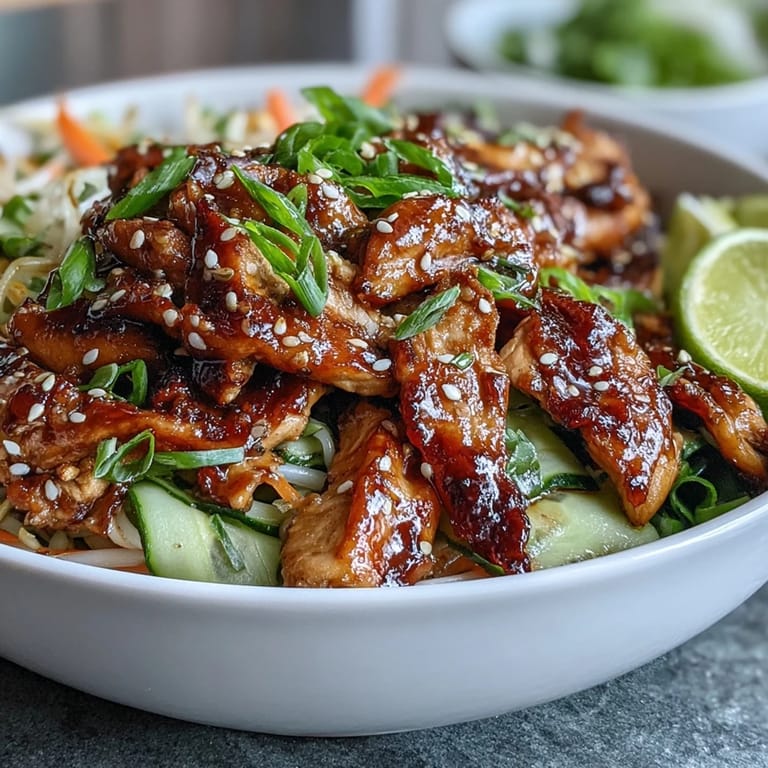
 This bowl taught me that good food doesn't require hours of effort or a long list of obscure ingredients—it just requires intention and understanding how flavors work together. It's become one of those dishes I make regularly enough that I could probably do it in my sleep, yet it still feels special every single time.
Frequently Asked Questions
- → Can I make this gluten-free?
Yes, use certified gluten-free tamari and rice noodles to make this bowl completely gluten-free while maintaining all the authentic flavors.
- → What noodles work best?
Rice noodles are traditional and gluten-free, but wheat noodles, soba, or even zucchini noodles make excellent alternatives depending on your preference.
- → Can I prepare this in advance?
Marinate chicken up to 24 hours ahead. Cook components separately and assemble just before serving to keep vegetables crisp and noodles from becoming soggy.
- → How spicy is this dish?
The base version is mild. Add chili flakes or Sriracha to taste, or serve hot sauce on the table so everyone can adjust their own spice level.
- → What protein substitutes work well?
Firm tofu, shrimp, or sliced beef all work beautifully with these flavors. For vegetarian options, omit fish sauce or use a vegetarian alternative.
- → How do I store leftovers?
Store components separately in airtight containers. Reheat chicken gently and toss with noodles and sauce just before serving for best texture and flavor.