 Pin This
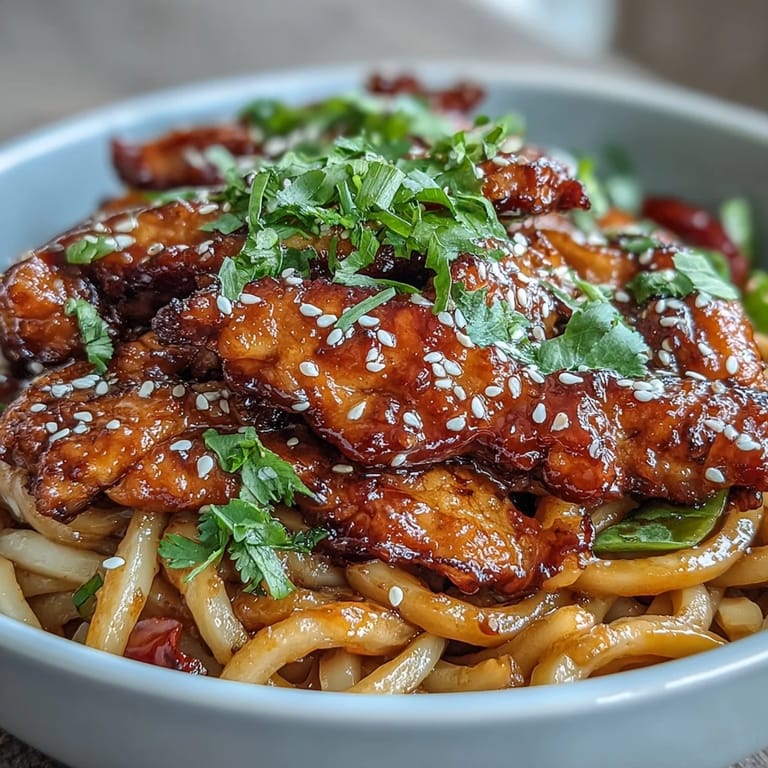
 One Tuesday night, my kitchen filled with the smell of sesame oil and ginger while I was supposed to be making something simple for dinner. Instead, I found myself tossing chicken and noodles together in a way that felt both spontaneous and somehow exactly right, creating this bowl that my family asked for again the next week. The beauty of this dish is how it comes together in barely more time than it takes to boil water, yet tastes like you've been planning it all day.
I made this for my neighbor one evening when she dropped by unexpectedly, and watching her take that first bite—eyes widening as the flavors hit—reminded me why cooking for others never gets old. She went home and texted me the next day asking for the recipe, which is always the highest compliment.
Ingredients
- Boneless, skinless chicken breast or thighs (500 g): Thighs are actually more forgiving if you're nervous about drying things out, though breast works beautifully when sliced thin.
- Dried udon, soba, or rice noodles (250 g): Each brings its own personality—udon for chewiness, soba for earthiness, rice noodles for lightness.
- Red bell pepper (1), thinly sliced: The color matters here as much as the flavor; it catches the light in the bowl and makes everything look more alive.
- Medium carrot, julienned: Cut them thin so they soften just enough without turning into mush.
- Sugar snap peas (100 g), trimmed: These stay sweet and snappy if you don't overcook them, which is exactly the point.
- Spring onions (2), sliced: Save some of the green parts for garnish; they add brightness at the end.
- Low-sodium soy sauce (60 ml): Low-sodium lets you taste the other flavors instead of just salt.
- Brown sugar (2 tbsp): This is what makes the sauce feel rounded and slightly caramelized rather than just salty.
- Toasted sesame oil (1 tbsp): The toasted kind is non-negotiable; it has a deeper, nuttier flavor that raw sesame oil can't match.
- Rice vinegar (1 tbsp): A small amount that cuts through the richness without making anything taste sour.
- Fresh ginger, grated (2 tsp): Use a microplane if you have one; it distributes more evenly than chopping.
- Garlic cloves, minced (2): Fresh garlic is worth the thirty seconds it takes to mince.
- Cornstarch (1 tsp, optional): Only add this if you like a thicker sauce that clings to the noodles; skip it if you prefer things looser.
- Toasted sesame seeds (2 tbsp) for garnish: Buy them already toasted to save a step and ensure they don't burn.
- Fresh coriander or cilantro, chopped: The fresh herb at the end transforms everything from good to genuinely special.
- Lime wedges (optional): A squeeze of lime right before eating brightens each bite.
Tired of Takeout? 🥡
Get 10 meals you can make faster than delivery arrives. Seriously.
One email. No spam. Unsubscribe anytime.
Instructions
- Start with the noodles:
- Boil your noodles according to the package, then drain and rinse them under cold water so they don't stick together while you're finishing everything else. This is the one step you can do first while your pan heats up.
- Mix your sauce while your hands are clean:
- Whisk together soy sauce, brown sugar, sesame oil, rice vinegar, ginger, garlic, and cornstarch in a small bowl. The cornstarch is optional, but I find it makes the sauce coat the noodles more satisfyingly.
- Get your pan screaming hot:
- Use a large skillet or wok over medium-high heat with just a splash of oil—you want it shimmering, not smoking. This is where the sear happens that makes the chicken taste like you know what you're doing.
- Cook the chicken until it's golden:
- Spread the sliced chicken in a single layer and let it sit for a minute before you start moving it around. You're looking for browned edges and cooked-through centers in about 4 to 5 minutes, then set it aside on a clean plate.
- Quick stir-fry the vegetables:
- Add a little more oil if the pan looks dry, then toss in your bell pepper, carrot, and snap peas. You want them to soften just enough to lose their raw edge while still having some snap when you bite them, which happens in 2 to 3 minutes.
- Bring it all back together:
- Return the chicken to the pan, pour in that sauce you made earlier, and toss everything so it's coated. Let it simmer for a minute or two while the sauce thickens and everything gets to know each other.
- Add the noodles and spring onions:
- Tip in your cooked noodles and most of the spring onions, then toss everything together one more time until it's all heated through and the noodles are coated in that glossy sauce.
- Serve and garnish like you mean it:
- Divide everything among bowls and top with sesame seeds, cilantro, and a few reserved spring onion greens. A lime wedge on the side makes the whole thing sing.
 Pin This
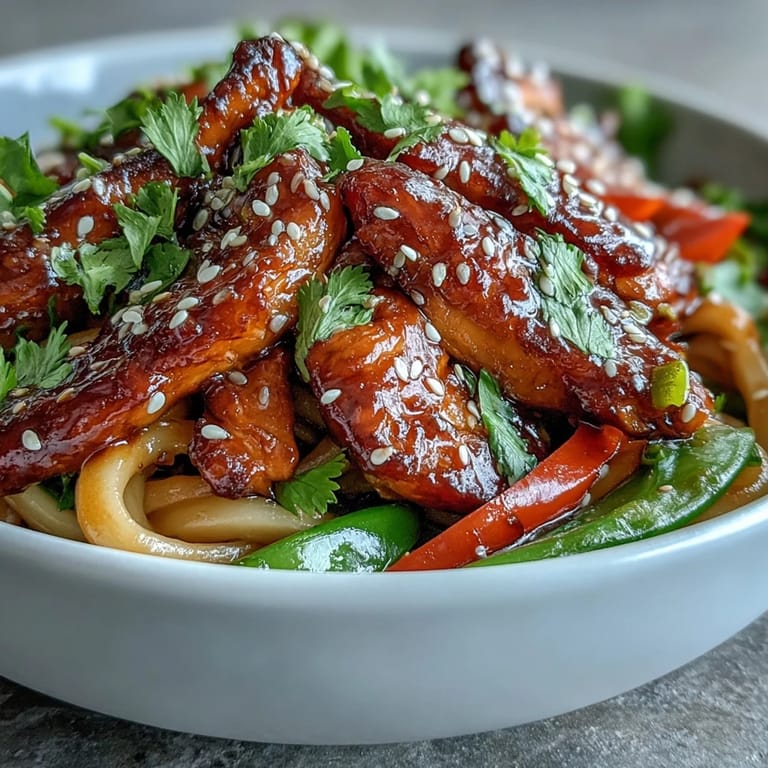
 My eight-year-old actually asked for seconds, which in our house is rare enough that I knew this bowl had crossed from dinner into something she genuinely wanted to eat. That's when a recipe stops being instructions and becomes a small triumph.
The Sauce is Everything
I used to think sesame sauce had to be complicated, but this one taught me otherwise. The brown sugar is the secret—it rounds out the salty soy and creates a glaze that feels intentional rather than just salty liquid. Toast your sesame oil on your tongue for a second and you'll understand why it can't be substituted; it has a warmth that raw sesame oil completely lacks.
Building Your Bowl
The order you layer things matters more than most recipes admit. Noodles first create a base, then the warm chicken and vegetables on top so their heat releases the aroma of the cilantro. When everything sits in the bowl together, the flavors don't just coexist—they actually talk to each other.
Making it Your Own
This bowl is genuinely forgiving in ways that feel almost magical. I've made it with tofu instead of chicken for a vegetarian friend, with broccoli and mushrooms, even with whatever greens were sad in the back of my fridge. The sauce and noodles are so good that they carry whatever vegetables you choose.
- Tofu tip: Press your tofu first, cut it into bite-sized pieces, and let it get crispy before adding the sauce.
- Extra heat option: Red chili flakes or sriracha stirred into the sauce at the end transform the whole mood without overwhelming the other flavors.
- Make ahead move: You can prep all your vegetables the morning of and store them separately; the actual cooking takes only 15 minutes from there.
 Pin This
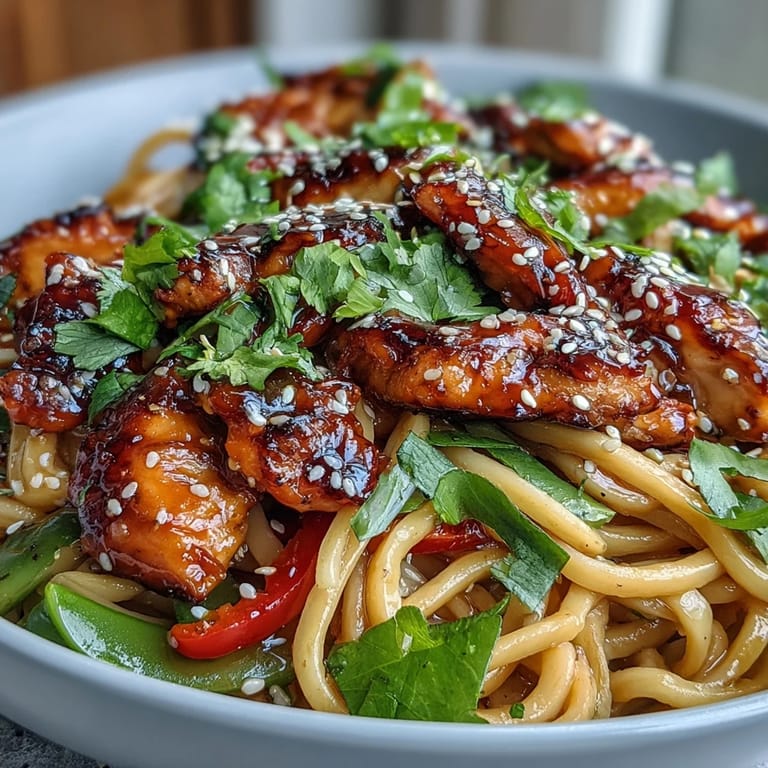
 This bowl has become the thing I make when I want dinner to feel considered but my time is completely gone. It's fast enough for a weeknight but good enough for someone you're trying to impress.
Frequently Asked Questions
- → What type of noodles work best for this dish?
Udon, soba, or rice noodles all work beautifully. Udon offers a chewy texture that holds sauce well, soba adds a nutty buckwheat flavor, and rice noodles provide a lighter option. Choose based on preference or what's available in your pantry.
- → Can I make this dish ahead of time?
The sauce can be whisked together up to 3 days in advance and stored in the refrigerator. Cooked noodles and stir-fried components are best enjoyed fresh, but leftovers keep well for 2-3 days when stored separately. Reheat gently with a splash of water to refresh the sauce.
- → How do I prevent the noodles from sticking together?
After cooking, drain and rinse the noodles thoroughly under cold water to stop the cooking process and remove excess starch. Toss with a small amount of sesame oil before setting aside. This prevents clumping and makes them easier to incorporate into the skillet later.
- → What vegetables can I add or substitute?
Beyond bell pepper, carrot, and sugar snap peas, try broccoli florets, shiitake mushrooms, baby corn, sliced bok choy, or snow peas. The key is to cut vegetables into uniform, bite-sized pieces so they cook evenly and maintain a pleasant crunch.
- → Is this dish gluten-free?
The traditional version contains gluten from soy sauce and wheat-based noodles. To make it gluten-free, substitute tamari or coconut aminos for soy sauce and use rice noodles or certified gluten-free udon. Always check labels on condiments like soy sauce for hidden gluten.
- → How can I add more protein to this bowl?
Beyond the chicken, you can add edamame, scrambled egg strands cooked separately and folded in at the end, or increase the chicken portion. For a vegetarian protein boost, firm tofu cubes or tempeh work wonderfully when pan-fried until golden before adding to the vegetables.