 Pin This
 My neighbor brought over a container of seaweed salad one summer evening, and I was skeptical until the first bite hit my tongue—that bright sesame-ginger punch combined with the ocean's subtle umami made me understand why she'd been raving about it. What started as curiosity became an obsession, and I realized this wasn't just a side dish; it was a gateway to understanding how Japanese home cooks build flavor with minimal ingredients. The best part? It takes fifteen minutes and tastes like you've been cooking all day.
I made this for a dinner party once when someone mentioned being vegan, and watching everyone at the table—meat eaters and plant-based alike—go back for seconds without realizing what they were eating told me everything about its universal appeal. There was this quiet moment where someone asked what made it taste so complete, and I knew the simple dressing had done its job perfectly.
Ingredients
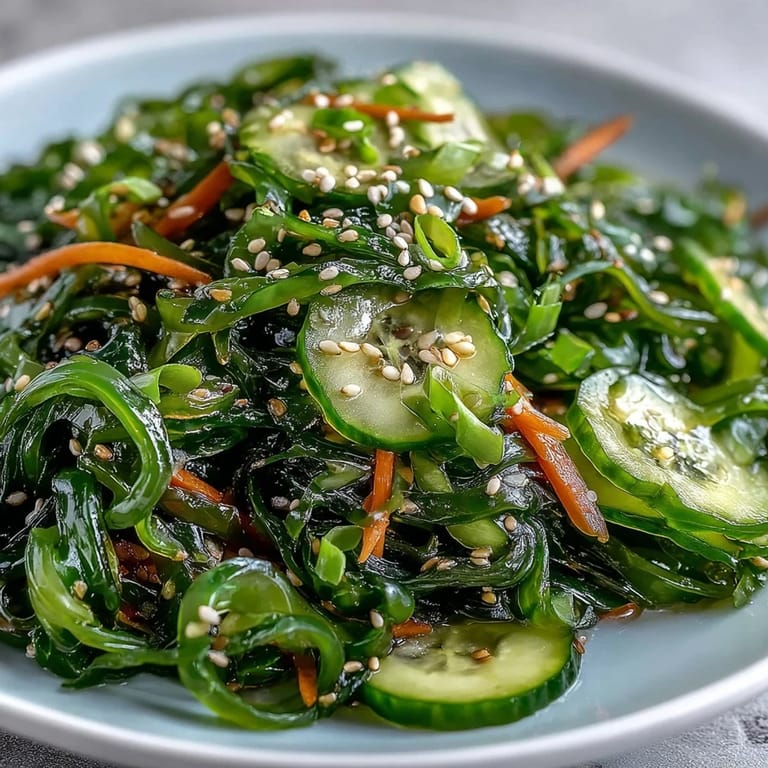
- Dried wakame seaweed (30 g, about 1 cup dried): This is your star ingredient—it rehydrates into tender ribbons packed with minerals and that distinctive oceanic depth that makes this dish memorable.
- Cucumber (1 small, thinly sliced): Keeps everything light and adds a refreshing crunch that balances the nutty sesame oil.
- Carrot (1 small, julienned): A touch of natural sweetness and a pop of color that makes this visually striking on any plate.
- Scallions (2, thinly sliced): They add a gentle onion brightness without overpowering the delicate seaweed flavors.
- Toasted sesame oil (2 tbsp): Buy the good stuff—this is where the soul of the dressing lives, so splurge if you can.
- Rice vinegar (1½ tbsp): The acid that wakes everything up and keeps the flavors from feeling flat or one-note.
- Low-sodium soy sauce or tamari (1 tbsp): Umami foundation that deepens without screaming salt; use tamari if you're keeping this gluten-free.
- Freshly grated ginger (1 tbsp): Never use powdered here—fresh ginger gives a bright, almost spicy warmth that bottled versions can't replicate.
- Maple syrup or honey (1 tbsp): A whisper of sweetness that rounds out the sharpness and ties all the flavors together.
- Toasted sesame seeds (1 tsp in dressing, 1 tbsp for garnish): Toast your own if possible; that nutty, warm aroma means you're doing it right.
- Chili flakes (½ tsp, optional): A subtle heat that lingers without dominating—skip it if you prefer pure, clean flavors.
- Fresh cilantro or parsley (1 tbsp, optional): A final green note that brightens everything, though the salad stands perfectly on its own without it.
Tired of Takeout? 🥡
Get 10 meals you can make faster than delivery arrives. Seriously.
One email. No spam. Unsubscribe anytime.
Instructions
- Rehydrate the seaweed:
- Place the dried wakame in a bowl and cover with cold water, then let it sit for 7 to 10 minutes while watching it magically expand and soften. Drain it well and squeeze gently with your hands to remove excess water—this step prevents a soggy, watery salad later.
- Combine the vegetables:
- In your largest bowl, gather the rehydrated seaweed, cucumber slices, julienned carrot, and scallion rings, and mix them together gently so nothing gets bruised. This is where you get your first sense of the textures working together.
- Whisk the dressing:
- In a separate small bowl, whisk the sesame oil, rice vinegar, soy sauce, ginger, maple syrup, sesame seeds, and chili flakes until everything is combined and the sweetness starts to dissolve. You'll know it's right when you taste a drop and everything feels balanced.
- Bring it all together:
- Pour the dressing over your vegetable and seaweed mixture and toss everything gently with a salad tongs or two spoons, making sure every piece gets coated. Don't be rough—you want tender seaweed, not shredded seaweed.
- Finish and serve:
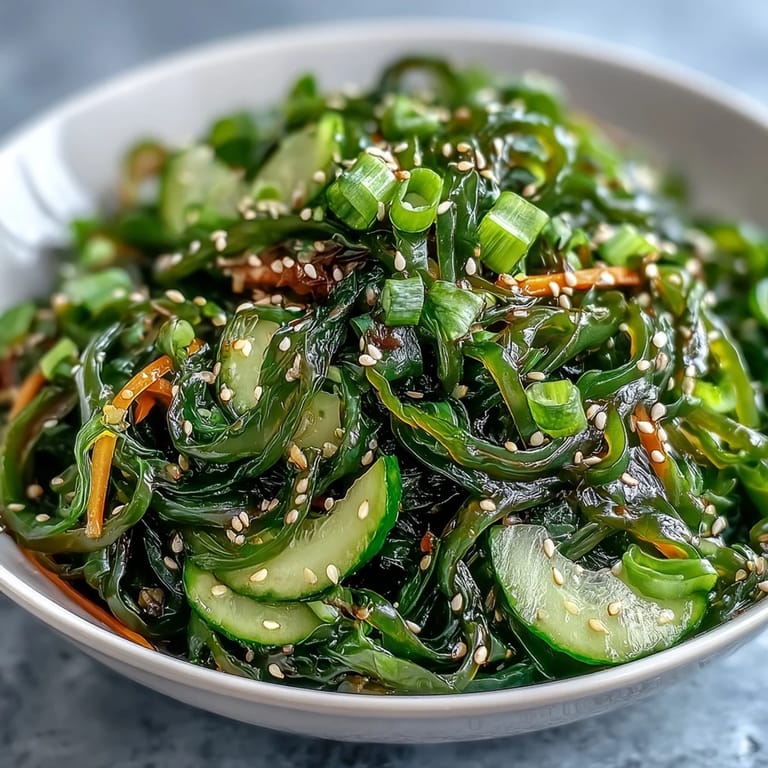
- Transfer to your serving bowl and scatter the extra sesame seeds and fresh herbs on top if you're using them. You can serve this immediately while everything is crisp, or chill it for 15 to 30 minutes if you prefer the flavors to meld together.
 Pin This
 There was an afternoon when my daughter came home from school complaining about being tired, and instead of reaching for something heavy, I made this salad and served it with cold green tea. She ate the whole bowl without being asked, and afterward she stretched out on the couch looking recharged in a way that told me good food does more than fill your stomach.
When to Serve This
This salad fits anywhere—before a larger Japanese meal, alongside grilled fish or chicken, or as the centerpiece of a light lunch when you want something that feels special without the commitment. I've served it at room temperature and chilled, and both ways work beautifully depending on the season and your mood. It's equally happy on a warm summer night as it is on a quiet weeknight when you need something that feels effortless.
Storage and Make-Ahead Wisdom
Leftovers keep in an airtight container for up to two days, though I find the texture stays crispest if you store the dressing separately and toss everything together just before eating. You can rehydrate your seaweed a few hours ahead if you're planning to cook, which takes the edge off your prep timeline. The dressing itself actually tastes better the next day once all the ginger and sesame have had time to get to know each other.
Flavor Variations and Additions
This recipe is a blank canvas, and part of its charm is how it adapts to what you have or what you're craving. Thin slices of radish add a peppery snap, shredded red cabbage brings an unexpected sweetness, and a handful of edamame or roasted chickpeas transform it into something more substantial. I've added everything from thinly sliced jalapeños to pomegranate seeds, and every version has its own personality while staying true to the soul of the original.
- Try a drizzle of chili oil on top for extra depth and a lingering warmth.
- Fresh mint or shiso leaves add an herbaceous note if you want to experiment beyond cilantro.
- A sprinkle of wasabi-dusted peas or even crispy fried shallots can push the texture and flavor in exciting directions.
 Pin This
 Every time I make this salad, I'm reminded that the best dishes are often the simplest ones—built on good ingredients, balanced flavors, and the kind of respect for a food's origins that shows in every bite. It's become my answer when someone asks what to make when you want to feel nourished, impressed with yourself, and a little bit transported.
Frequently Asked Questions
- → What type of seaweed works best?
Wakame seaweed is ideal for this dish—it rehydrates beautifully and has a tender texture. Other varieties like hijiki or kombu can work but may require longer soaking and different preparation methods.
- → Can I make this ahead of time?
Absolutely! The flavors actually improve after 15–30 minutes of chilling. Store in an airtight container in the refrigerator for up to 2 days. The vegetables will stay crisp and the seaweed will absorb more of the dressing.
- → Is this dish naturally vegan?
Yes, when made with maple syrup instead of honey and tamari rather than regular soy sauce, this dish is completely vegan and gluten-free. Always check your seaweed package for any added ingredients or processing information.
- → How do I prevent the seaweed from becoming too salty?
Rinse the rehydrated seaweed thoroughly after soaking and squeeze out excess water. Taste the dressing before adding—it should be tangy and balanced, not overly salty. You can always adjust with more vinegar or a touch of water.
- → What can I substitute for maple syrup?
Honey, agave nectar, or even a pinch of brown sugar works well. The sweetener balances the acidity and saltiness, creating that characteristic Japanese-style flavor profile.
- → Can I add other vegetables?
Thinly sliced radish, shredded red cabbage, or even bell peppers add wonderful crunch and color. Just keep pieces uniform in size for the best texture and presentation.